Key points
- Keep luggage off the bed when you travel, and hot wash or tumble dry your clothes when you get home.
- Inspect second-hand furniture before it comes indoors. Avoid used mattresses altogether.
- In flats, report problems early so neighbouring homes can be checked.
- Repellents and plug-in devices do not prevent bed bugs. Regular checks do far more.
In this guide
When you travel
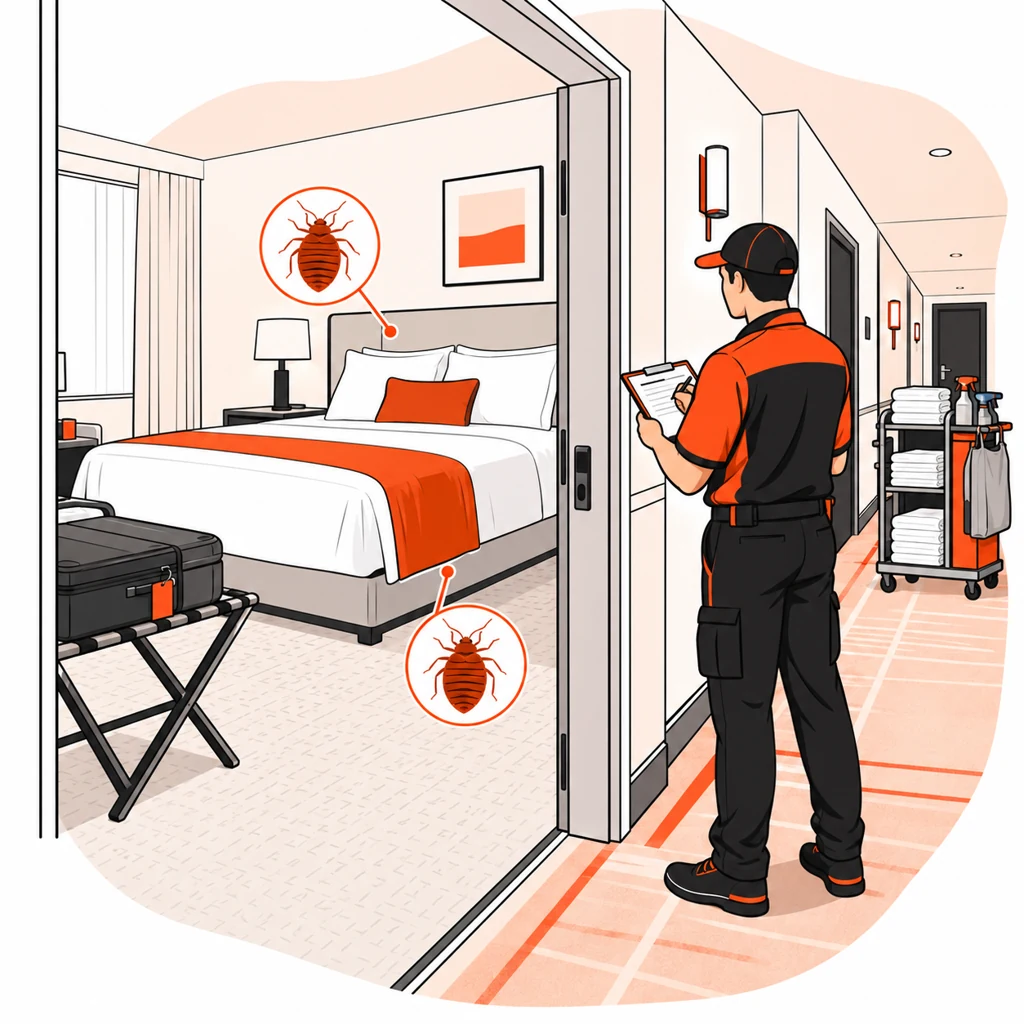
- Put your case somewhere hard first. The luggage rack, a desk or the bath. Not the bed, the carpet or an upholstered chair.
- Check the bed. Pull back the sheet at the head end and look along the mattress seams and piping for dark spots, shed skins or insects.
- Look behind the headboard if you can, and at the bedside table joints.
- Found something? Ask for another room that is not next to, above or below the first, or move hotel.
- Keep clothes in the case or hung up, not in drawers or spread over the bed.
The same applies to hostels, holiday lets, overnight trains and staying with friends.
When you get home
- Unpack on a hard floor, in the bathroom or hallway, not on your bed.
- Put everything washable through a 60°C wash, or straight into a hot tumble dryer for at least 30 minutes, including clothes you did not wear.
- Check the seams, pockets and wheel housings of the case, vacuum it, and store it away from the bedroom.
Second-hand furniture
Used furniture is one of the commonest ways bed bugs get into London homes. A bargain bed frame can cost far more than it saves.
Before it comes indoors
- Inspect joints, screw holes, seams and the underside with a torch
- Look for black spots, pale shed skins and tiny white eggs
- Ask the seller why they are getting rid of it
- Wash or hot tumble dry any covers and cushions
Avoid
- Used mattresses and divan bases
- Furniture left in the street or by bins
- Anything with stains or spots along the seams
- Storing used items in a bedroom until checked
Flats and shared houses
In a shared building some of the risk is outside your control, but you can still reduce it.
- Report it early. Tell your landlord, agent or housing officer as soon as you suspect bed bugs, so neighbouring homes can be inspected.
- Seal the obvious gaps. Filling gaps around pipes and along skirting slows movement between flats. It will not stop a determined infestation.
- Be careful with shared laundry rooms. Carry washing in a sealed bag and take it home hot from the dryer.
- Do not take in discarded furniture from the building, however good it looks.
If you manage a shared property, see our page on bed bug treatment for HMOs.
Habits that catch them early
An infestation caught in its first few weeks is simpler to deal with than one that has had months to spread.
- Look when you change the bed. A glance along the mattress seams and the headboard takes seconds.
- Keep the area around the bed clear. Fewer hiding places, and anything unusual is easier to see.
- Use light-coloured bedding. Spots and insects show up against it.
- Consider mattress and base encasements. They do not keep bed bugs out of a room, but they remove hiding places and make signs obvious.
- Vacuum bedroom edges regularly, including under the bed.
- Take unexplained bites seriously. Check the bed before assuming it was a mosquito.
Not sure what you are looking for? See how to spot bed bugs.
After a treatment
Once a home has been cleared, the aim is to avoid bringing bed bugs back in.
- Work out the likely source if you can, and deal with it. See where bed bugs come from.
- In a flat, make sure neighbouring homes have been checked.
- Keep up the travel and furniture habits above.
- Report any new activity straight away. Our qualifying treatments include 12-week return cover.
Prevention is not a cure. If bed bugs are already in your home, these steps will not remove them. See how to kill bed bugs.
Common questions
Do bed bug repellents or plug-in devices work?
There is no good evidence that sprays, sachets or ultrasonic plug-ins keep bed bugs away. Do not rely on them.
Do mattress protectors prevent bed bugs?
No. A zipped encasement stops them living inside the mattress and makes them easier to spot, but they can still live in the frame and the room.
Does keeping a clean house prevent bed bugs?
Cleanliness does not keep them out. Tidiness and regular vacuuming help you find them sooner.
Should I treat my home as a precaution?
No. Treating without evidence of bed bugs is not worthwhile. Inspect instead, and act if you find something.
Can I stop them coming from next door?
Not reliably on your own. The neighbouring home needs to be treated too, which is why landlords and managing agents should be told early.